Leave Your Message
The Neoprene Beach Bag market is growing alongside demand for lightweight, water-resistant travel products. Grand View Research reports that the global neoprene market reached approximately USD 2.1 billion in 2023. It also projects steady growth through 2030. These figures offer useful context, but they do not isolate beach bags. That gap matters.
Global buyers need more than attractive product photos. They should examine neoprene density, stitching quality, lining construction, zipper performance, and handle reinforcement. A practical sample test can reveal weak seams quickly. Fill the bag with towels, place it near saltwater, and inspect it after drying. Simple checks often expose costly assumptions.
Yvon Chouinard, outdoor-industry pioneer and Patagonia founder, once said, “The best thing we can do for the environment is make products that last a long time.” His observation remains relevant when comparing Neoprene Beach Bag manufacturers. Longer product life can reduce replacement frequency and improve buyer value. However, durability claims still require evidence. Ask for material specifications, factory audits, production samples, and test documentation.
This guide evaluates leading suppliers for international buyers. It considers manufacturing experience, customization capacity, quality control, minimum order quantities, and export readiness. Reports from Fortune Business Insights also indicate continued neoprene-market expansion, supported by applications in sportswear and protective goods. Yet market forecasts are not guarantees. A polished catalog does not prove dependable production. Supplier selection requires patient verification, clear communication, and occasional skepticism. That is the less glamorous part. It is also where responsible purchasing decisions usually begin.
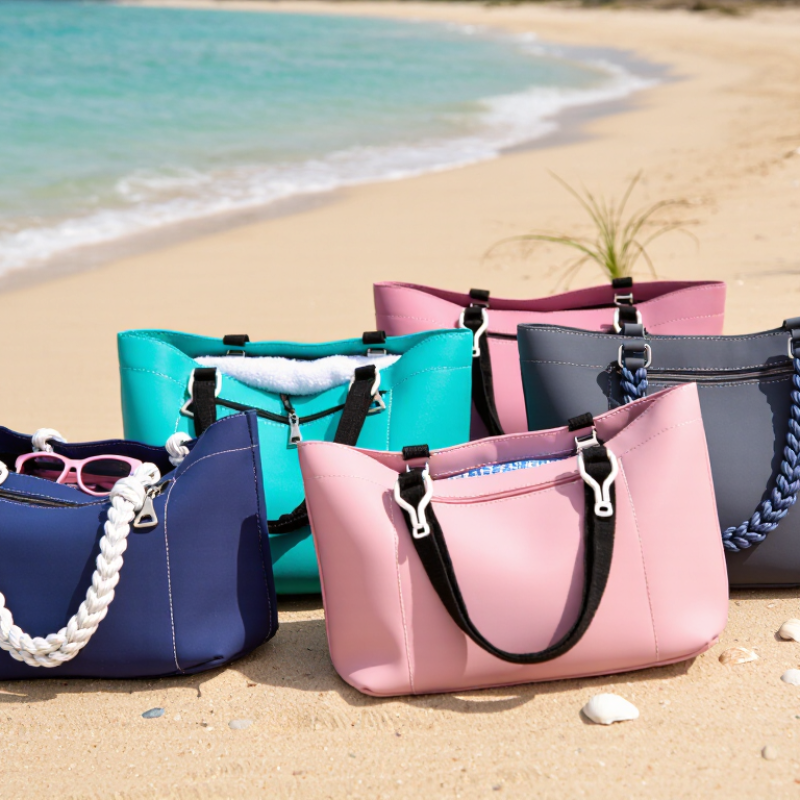
Neoprene beach bag manufacturers suit global buyers because the material combines flexibility, water resistance, and cushioning. These qualities matter when bags move through humid ports or crowded holiday markets. According to UNCTAD’s Review of Maritime Transport 2024, maritime shipping carries over 80% of global merchandise trade. Manufacturers with export experience should therefore provide strong carton protection, moisture control, and clear shipping documents. Small details prevent expensive delays.
Reliable suppliers also use repeatable production controls. Buyers should ask for material thickness records, seam-strength tests, colorfastness results, and pre-shipment inspections. ISO 9001-based quality systems can support consistency, although certification alone proves little. A factory should explain how it handles uneven stitching, odor, zipper failure, and logo placement. These problems appear minor. They are not. Textile Exchange’s Materials Market Report 2024 highlights the continued dominance of fossil-based synthetic materials, including many rubber-derived products. This makes recycled-content options and waste reduction worth discussing early.
Tips: Request a sample in the final material, not a similar substitute. Confirm dimensions after filling the bag. Ask for test reports from independent laboratories. Also check packaging volume, because oversized cartons can quietly increase freight costs. I would not rely only on attractive product photos. A factory may look professional online yet struggle with production records or corrective action. That is an uncomfortable but useful warning for global buyers.
| Evaluation Dimension | Typical Commercial Information | Why It Matters to Global Buyers | Recommended Verification |
|---|---|---|---|
| Primary Material | Synthetic chloroprene rubber, commonly laminated with polyester or nylon fabric. | Provides cushioning, flexibility, water resistance and protection against light splashes and sand. | Request the material composition, lamination details and a physical sample. |
| Common Neoprene Thickness | Approximately 2–5 mm is commonly used for flexible consumer bags; the actual specification varies by design. | Thickness affects structure, weight, insulation, handling comfort and shipping cost. | Confirm thickness tolerance at several points on a pre-production sample. |
| Construction Options | Typical options include stitched seams, bound edges, reinforced handles, zipped closures, snap closures and internal pockets. | Different markets require different levels of durability, organization and closure security. | Review seam strength, handle attachment, zipper operation and load-test results. |
| Size and Capacity | Beach bags are often developed in small, medium and large formats rather than one universal size. | A clear capacity specification helps buyers compare products and plan packaging and freight efficiently. | Specify external dimensions, usable internal dimensions, handle drop and maximum recommended load. |
| Water and Sand Resistance | Neoprene itself is water-resistant, but stitched seams, zippers and fabric laminations may allow water or sand entry. | This distinction prevents overclaiming performance in product listings and packaging. | Use defined test conditions; do not describe a standard beach bag as fully waterproof unless tested and documented. |
| Color and Decoration | Common decoration methods include screen printing, heat transfer, sublimation and sewn labels. | Localizing colors and artwork supports retail, promotional and private-label programs in different markets. | Approve a physical color sample and define acceptable color variation before bulk production. |
| Compliance Documentation | Depending on the destination and use, buyers may request restricted-substance declarations, test reports, packaging information and traceability records. | Documentation supports customs clearance, retailer onboarding and responsible product claims. | Match every report to the exact material, color, style and production batch being purchased. |
| Packaging and Export Readiness | Typical export packaging includes individual protective packing, carton packing, carton markings and packing lists. | Consistent packing reduces damage, improves warehouse handling and simplifies international logistics. | Confirm carton dimensions, gross weight, carton quantity, shipping marks and pallet requirements. |
| Sampling and Quality Control | A professional sourcing process normally includes prototype approval, pre-production confirmation and final inspection. | Stage-based inspection helps control dimensions, color, workmanship, odor, packaging and functionality. | Use an agreed inspection checklist with measurable acceptance criteria. |
| Sustainability Considerations | Neoprene is a synthetic rubber and is not automatically biodegradable; recycled-content options may be available but require verification. | Accurate environmental claims reduce regulatory, retailer and reputational risk. | Request recycled-content evidence, material certifications and clear end-of-life guidance before making claims. |
| Best Fit for Global Buyers | Manufacturers able to provide consistent specifications, documented quality procedures, export packaging and responsive sampling support. | These capabilities make it easier to adapt products to different regulations, retail channels, climates and customer expectations. | Evaluate samples, production capacity, communication process, lead-time records and documentation together rather than relying on price alone. |
Note: Specifications and compliance requirements vary by product design, destination market and buyer contract. All technical claims should be confirmed through samples, test reports and written production specifications.