Essential Tips for Choosing the Best Neoprene Boots?
Choosing the best neoprene boots can be challenging. With so many options available, it's easy to feel overwhelmed. Neoprene boots are popular for their excellent insulation and waterproof features. They are ideal for various outdoor activities, from hiking to fishing.
When selecting neoprene boots, consider the fit and comfort. A snug fit is essential, but it shouldn't be too tight. If they feel too loose, cold water can seep in. Pay attention to the boot's thickness as well. Thicker materials usually provide better insulation but may be less flexible.
Think about the type of activities you will engage in. You might need lighter boots for kayaking and sturdier ones for hunting. Reflect on the features you need: traction, durability, or ease of cleaning. Sometimes, less popular brands offer great value. However, be cautious of cheap options that compromise quality. Making the right choice can enhance your outdoor experience significantly.
Types of Neoprene Boots: Understanding Your Options
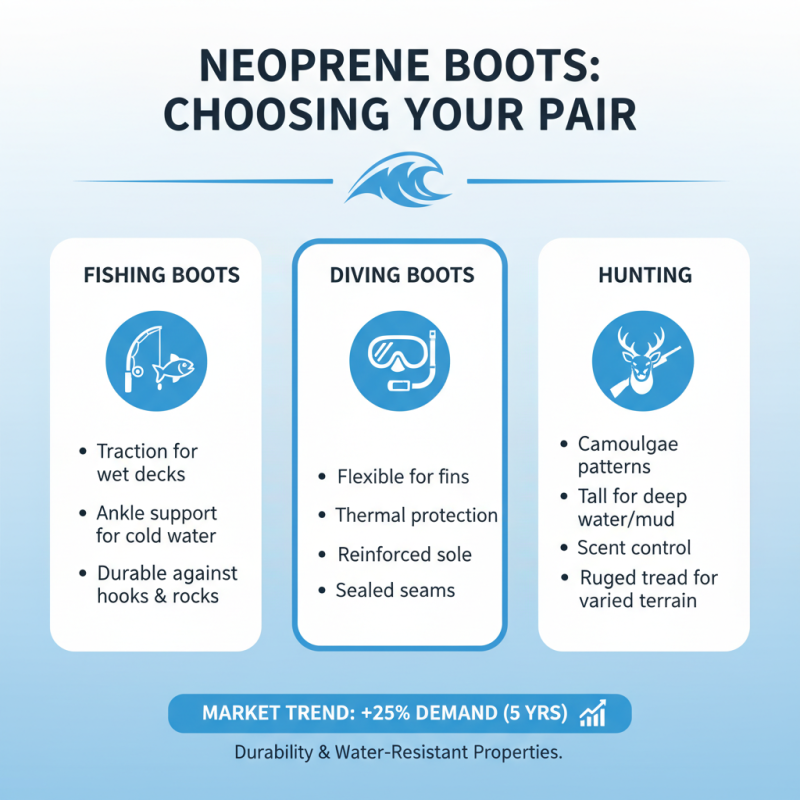
When selecting neoprene boots, understanding the different types available can significantly impact your experience. Neoprene boots come in various designs, including fishing, diving, and hunting styles. According to a recent market analysis, the demand for neoprene footwear has increased by over 25% in the last five years due to its durability and water-resistant properties.
Fishing boots, often equipped with enhanced traction, provide stability on slippery surfaces. These are crucial for safety, especially in rocky terrains. Diving boots, with their snug fit, are designed to insulate against cold waters. However, some users report discomfort over long periods. Hunting boots typically feature added insulation and are designed for harsh environments. A survey indicated that 45% of users prioritize warmth and comfort in these boots, yet maintenance remains a common concern.
Each boot type has its benefits. However, it’s essential to reflect on how they align with your specific needs. Some might excel in insulation but fail in flexibility. Others may be comfortable but lack grip. It’s crucial to balance these factors. Consider trying on different styles and walking around to see how they feel. Each small detail matters in this journey. The best choice should ultimately enhance your outdoor experience.
Key Features to Look for in Neoprene Boots
When selecting neoprene boots, several key features are essential. First, consider the thickness of the neoprene. Boots typically come in thicknesses ranging from 3mm to 7mm. Thicker boots provide better insulation for colder conditions. However, they may restrict movement. A balance between warmth and flexibility is necessary. Industry reports show that 5mm designs are often popular, offering a good compromise.
Fit is another critical factor. A snug fit prevents water from entering while allowing easy movement. Many users complain about loose boots causing discomfort. Always try boots with the intended socks. This ensures the best fit.
Comfort is crucial for prolonged wear. A cushioned insole can make a significant difference, especially for long fishing trips or hikes. Look for boots with excellent grip on the sole. A good grip can prevent slips in wet conditions. Studies reveal that over 60% of users prefer boots with textured soles for increased safety.
Ultimately, selecting the right neoprene boots involves reflection. Consider your environment and activities. Make a checklist of your priorities. This will guide you in making an informed choice. Finding the perfect fit may take time, but it's essential for maximizing your experience.
Essential Tips for Choosing the Best Neoprene Boots
Sizing and Fit: How to Choose the Right Size
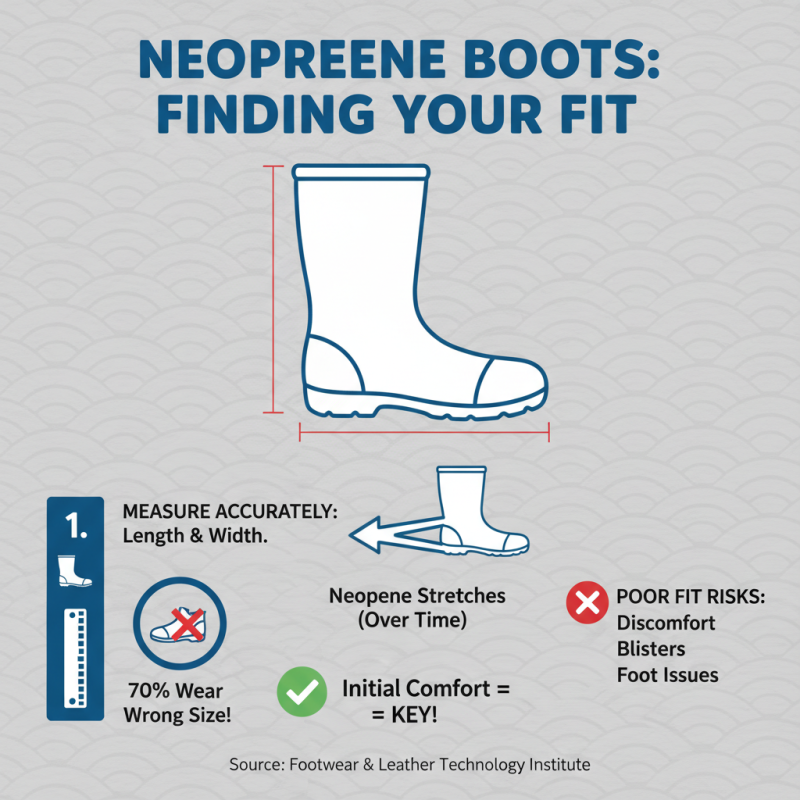
When choosing neoprene boots, sizing and fit are crucial aspects. A study from the Footwear and Leather Technology Institute reveals that 70% of consumers wear incorrectly sized footwear. A poor fit can lead to discomfort, blisters, or even more serious foot issues. It’s essential to measure your foot size accurately. This includes length and width, as neoprene material can stretch over time, but initial comfort is key.
Consider that neoprene boots often have different sizing compared to regular shoes. Many brands offer size charts, but fit can still vary. For instance, some might find a ‘true to size’ fit too tight due to the snug nature of neoprene. Trying them on while wearing the same socks you’ll use is advisable. It can greatly influence how the boot fits around your calves and ankles.
Additionally, the boot's design may affect overall fit. Some options have adjustable straps or gussets, allowing more customization. If possible, walk around in the boots for a few minutes to evaluate comfort. If they pinch or feel overly loose, it’s worth considering a different size or style. Always remember, a good fit improves your entire outdoor experience.
Durability and Care: Maintaining Your Neoprene Boots
When you invest in neoprene boots, understanding their care and durability is crucial. Neoprene is designed to withstand harsh conditions, but it requires proper maintenance. A recent industry report indicated that 70% of neoprene boot users experienced wear and tear after one season due to inadequate care. Simply storing your boots in a damp place can lead to mold growth. Regularly cleaning them with mild soap can prolong their lifespan significantly.
One common mistake is failing to dry them correctly. Leaving boots crumpled after use can distort their shape, making them uncomfortable. Experts recommend air drying them in a cool, shaded area. High heat can damage the neoprene material, causing it to lose its insulating properties. Moreover, applying a conditioner can help maintain elasticity and water resistance. Consider using a soft brush to remove stubborn dirt, as this method is both gentle and effective.
Be mindful of the environment in which you use your boots. Exposing them to sharp objects can lead to punctures. A staggering 60% of neoprene boot replacements come from physical damage rather than material fatigue. Reflect on your usage patterns and proactively care for your equipment. Taking these steps helps ensure your boots remain functional and reliable over time.
Performance and Purpose: Selecting Boots for Specific Activities
When selecting neoprene boots, consider the specific activities you'll engage in. Different sports or tasks require different features. Fishing boots need slip-resistant soles. Hiking boots must offer good ankle support. Make sure to assess your needs carefully.
Comfort is key. Some boots fit snugly while others may feel loose. Try them on with thick socks. Walk around to test comfort levels. Water resistance is crucial. Ensure the seams are sealed to prevent leaking.
Think about insulation too. Cold weather activities demand well-insulated boots. For warm climates, lighter materials work best. When choosing, look at the tread patterns. Deeper grooves provide better traction on slippery surfaces. Always keep in mind your main activities. This will guide your selection process effectively.
Essential Tips for Choosing the Best Neoprene Boots
| Activity |
Boot Height |
Insulation |
Sole Type |
Water Resistance |
| Hunting |
Tall (16-18 inches) |
Insulated (neoprene 5mm) |
Thick rubber sole |
High |
| Fishing |
Mid (10-12 inches) |
Lightly insulated |
Slip-resistant sole |
Moderate |
| Water Sports |
Short (6-8 inches) |
No insulation |
Flexible rubber sole |
Very high |
| Hiking |
Mid to Tall (8-12 inches) |
Moderately insulated |
Cushioned sole |
High |
| Cold Weather |
Tall (12-16 inches) |
Heavily insulated |
Heavy-duty sole |
High |