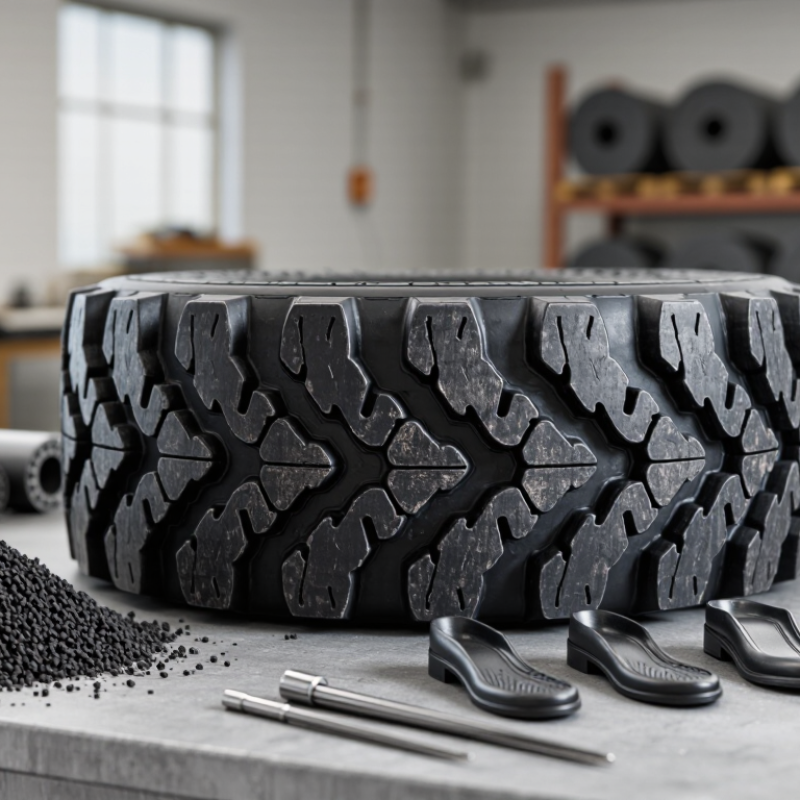
Styrene Butadiene Rubber, commonly called SBR, is a synthetic elastomer made from styrene and butadiene. Its name describes the main ingredients, but not one fixed recipe. The proportions, production method, and additives can change how a specific grade behaves. Not one fixed recipe. SBR is widely used in tire treads, shoe soles, conveyor belts, and other products that need flexibility and resistance to wear. In a workshop, its practical value may show up as a tough rubber tread that repeatedly meets the road. Yet performance depends on the complete compound, not just the polymer name.
This guide explains how SBR is produced, which properties make it useful, and where its limitations matter. Many grades offer good abrasion resistance and dependable performance in common applications. However, SBR generally performs less well than some specialty rubbers when exposed to oils, ozone, or outdoor weathering. Formulation and operating conditions can shift these results, so broad comparisons need care. A material datasheet is a useful starting point, not a guarantee for every finished product. That distinction is easy to miss. Understanding SBR means looking beyond a familiar acronym to the grade, compound, and working environment. The goal is not to call it universally better or worse, but to show why manufacturers choose it—and when another rubber may be more suitable.
Styrene-butadiene rubber, or SBR, is a synthetic elastomer made by joining styrene and 1,3-butadiene into long polymer chains. Styrene has the formula C₈H₈; butadiene has the formula C₄H₆. The two monomers become repeating units in the same chain, rather than remaining as separate ingredients. Their proportions vary by formulation, so SBR does not have one fixed chemical composition.
The ratio and arrangement of these units affect the rubber’s behavior. Styrene generally adds firmness, while butadiene contributes flexibility and resilience. Polymer chains can be produced through emulsion or solution processes, which influence their structure and properties. Small details matter. A finished SBR compound may also include fillers, oils, or curing agents, but these are additions to the base polymer, not part of its basic definition. That distinction is easy to blur. It is also worth remembering that chemical composition alone cannot predict every performance detail; processing, formulation, and testing conditions matter too.
What Is Styrene Butadiene Rubber SBR?
How SBR Is Manufactured and Processed
SBR starts with styrene and butadiene, then follows one of two common routes: emulsion or solution polymerization. In emulsion production, water, surfactants, and initiators help form rubber particles; operators control temperature, reaction time, and monomer conversion. Cold emulsion processes run at low temperatures, while solution processes use solvents and catalysts. The European Commission’s Best Available Techniques reference document for polymer production discusses process controls, emissions, and wastewater management. Small changes matter. A temperature drift can affect molecular structure and, later, grip or wear.
After polymerization, manufacturers stop the reaction and recover unreacted monomers. Emulsion SBR latex is typically coagulated, washed, and dried into crumb rubber. Solution SBR is stripped of solvent before drying. The rubber is then blended with ingredients such as carbon black, oils, and curing agents. It may be extruded or calendered into a shape, then vulcanized with heat to create a durable network. The International Rubber Study Group’s 2024 World Rubber Industry Outlook puts 2023 global synthetic-rubber output at roughly 15 million tonnes, a scale that makes consistent process control essential. Yet no recipe removes every trade-off.
Tip: Check moisture and dispersion before curing; a rough, uneven surface can signal a mixing problem. Measure, don’t guess.
Styrene-butadiene rubber, or SBR, is a synthetic elastomer whose performance depends on its styrene-to-butadiene ratio and compound design. The butadiene portion supports flexibility and rebound, while styrene can increase stiffness. Small changes matter. In a finished part, fillers, curing conditions, and hardness can shift the balance noticeably.
SBR is valued for abrasion resistance, making it useful where repeated rubbing wears materials down. A tread block flexes against rough pavement; a rubber roller meets steady friction. In both cases, a well-designed SBR compound can resist wear and retain useful elasticity. Its grip can also be tuned, though wet traction varies with formulation, temperature, and surface texture. One lab result is not the whole story.
There are trade-offs. SBR generally has limited resistance to oils and performs less well under ozone and prolonged outdoor exposure than some specialized elastomers. Heat can also speed aging, depending on the compound and operating conditions. A part near a warm motor may harden sooner than expected. Designers should compare test data with real service conditions, including temperature swings, sunlight, and contact with chemicals. That step is easy to overlook.
Typical glass transition temperatures of common synthetic and natural rubbers
SBR’s glass transition temperature is typically around −50°C, though it varies with styrene content and grade. Below this temperature, rubber becomes less flexible; actual compound performance also depends on formulation and processing.
Styrene-butadiene rubber, or SBR, is a synthetic rubber valued for abrasion resistance, resilience, and cost-effective processing. Its most visible role is in vehicle tires, where it helps tread withstand repeated contact with rough pavement. Formulators often blend SBR with other rubbers to balance grip, wear, and rolling resistance. No single compound excels at everything.
The International Rubber Study Group’s World Rubber Industry Outlook 2024 projected global rubber consumption at roughly 30 million tonnes for 2024.
This figure includes both natural and synthetic rubber, not SBR alone, but it shows the scale of demand across rubber-dependent industries.
SBR also appears in footwear soles, conveyor belts, hoses, and molded seals. A warehouse belt, for example, needs a surface that tolerates constant friction and repeated loads. SBR can suit that job, depending on the chemicals, heat, and environment involved.
Applications extend to carpet backing, flooring, and some adhesive products, where SBR latex can bind fibers or provide flexibility. The best choice depends on the actual service conditions. Oil exposure and prolonged outdoor weathering can challenge standard SBR; product designers may need another material or a protective formulation.
That trade-off is easy to miss. A specification that looks strong on paper may still need testing under real operating conditions.
Styrene-butadiene rubber (SBR) is a synthetic elastomer used in tires, footwear soles, belts, and floor coverings. Its appeal is practical: it resists abrasion, offers useful grip, and can be blended to suit different applications. In a workshop, a rubber sole may handle repeated contact with rough concrete. SBR is also generally less costly than some specialty elastomers. It is not a perfect all-rounder.
Its limitations matter. SBR can age faster under ozone, sunlight, or prolonged heat than some alternatives. It also performs poorly in contact with many oils and fuels. Environmental impacts depend on the formulation and product’s service life. Most SBR comes from fossil-based feedstocks, and manufacturing uses energy. Tire wear can release tiny rubber particles into the environment. End-of-life recovery is possible in some products, but mixed materials and additives can make recycling difficult. The details vary, and they deserve closer attention.
Tips: Match SBR to the actual exposure conditions. Check heat, sunlight, and chemical contact before choosing it. For products that wear down, ask how they can be repaired or recovered. A longer-lasting part may reduce waste, though that benefit depends on how it is used.