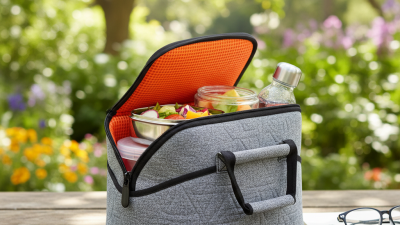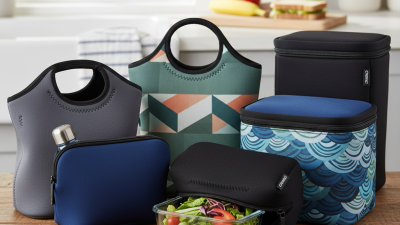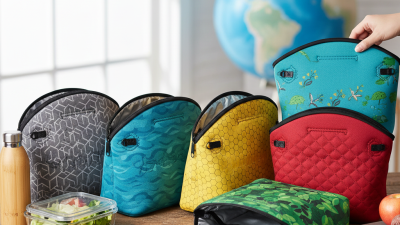
A Neoprene Bag Lunch looks simple, yet its performance depends on material science, construction, and daily handling. Neoprene is a flexible synthetic rubber with a closed-cell foam structure. Those tiny cells slow heat transfer between the lunch inside and the surrounding air. Your sandwich stays cooler for longer. Not forever.
“Neoprene works by slowing temperature change, not by creating cold,” explains Dr. Elaine Porter, a packaging-materials consultant who studies reusable food carriers. “Its value comes from insulation, flexibility, and protection working together.”
That distinction matters. A neoprene lunch bag may help preserve chilled fruit, yogurt, or a packed meal during a school or office commute. Its soft walls also cushion containers against small bumps. The zipper reduces exposure to warm air, while the stretchable fabric can hold different lunch-box shapes.
However, insulation has limits. A hot car, direct sunlight, or a long afternoon can overwhelm the material. Neoprene is not automatically waterproof, leakproof, or food-safe by itself. The lining, seams, and container design matter too. This is where many product descriptions become too confident.
A useful guide should examine how heat moves, how condensation forms, and how the bag should be cleaned. It should also mention odors, drying time, and the risk of carrying uncovered food. Those details are less exciting, but they affect real use.
Perhaps the biggest mistake is expecting one soft bag to solve every storage problem. A Neoprene Bag Lunch performs best with sealed containers, cold packs, and reasonable carrying times. It is practical, but not magical.
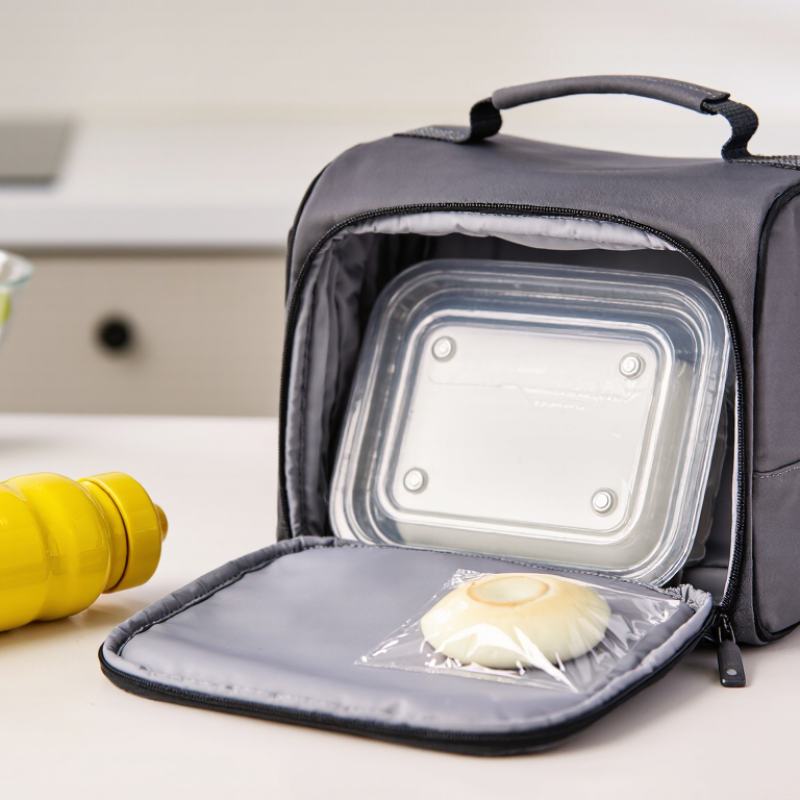
Neoprene is a synthetic rubber foam with a soft, flexible structure. It contains many tiny closed cells that slow heat movement. Most lunch bags use neoprene layers between 2 and 5 millimeters thick.
A 2 mm bag feels lighter and bends easily. A 5 mm bag usually offers stronger insulation and shape retention.
The material does not create cold or heat. It only delays temperature change. For example, a chilled drink may stay cool longer inside a thick neoprene sleeve. A warm meal can also lose heat more slowly.
Results depend on food temperature, opening frequency, and surrounding conditions. A bag left beside a sunny window will warm faster.
Neoprene resists splashes and handles daily carrying well. However, it is not automatically waterproof. Seams, zippers, and lining can still allow leaks.
Wipe spills quickly, then air-dry the bag fully. Trapped moisture may cause an unpleasant smell.
From practical use, thickness alone should not decide quality. A well-sealed 3 mm bag may perform better than a poorly finished 5 mm one.
That detail is easy to overlook.
No insulation works perfectly. A cold pack remains useful for foods that need closer temperature control.
A neoprene lunch bag uses a flexible, closed-cell foam shell to slow temperature change. Its tiny sealed cells contain gas, which transfers heat less efficiently than solid rubber. Typical neoprene conductivity ranges from 0.15 to 0.25 W/m·K, depending on density, formulation, and testing conditions. That number describes conduction. It does not promise a fixed cooling time.
When a warm lunch enters the bag, heat moves toward the cooler outer air. The foam interrupts that path with many thin cell walls and gas pockets. Lower conductivity means less heat crosses each square meter per second for the same temperature difference and thickness. A thicker wall usually resists transfer better, although compression can reduce its insulating effect. In practical packing, a snug bag slows warming, but it cannot replace an ice pack. Good fit matters.
The weakest points are often the zipper, seams, and openings around the container. These areas can leak warm air and create direct thermal bridges. A lunch bag also gains heat through the outer fabric and from sunlight. For reliable use, chill food before packing and leave minimal empty space around the container. Measurements vary because laboratories use different thicknesses, moisture levels, and temperature ranges. That limitation deserves attention. Conductivity is useful evidence, not a complete performance score.
| Data Dimension | Typical Value or Description | How It Affects a Lunch Bag |
|---|---|---|
| Material structure | Closed-cell synthetic rubber foam | Numerous small, sealed gas cells interrupt heat flow and provide lightweight insulation. |
| Thermal conductivity | Approximately 0.15–0.25 W/m·K | Lower conductivity means heat generally moves more slowly through the foam than through many solid, dense materials. |
| Illustrative insulation value at 3 mm thickness | R ≈ 0.012–0.020 m²·K/W | Calculated using R = thickness ÷ conductivity; actual bag performance also depends on seams, lining, compression, and air gaps. |
| Illustrative insulation value at 5 mm thickness | R ≈ 0.020–0.033 m²·K/W | Increasing foam thickness increases the theoretical resistance to conductive heat transfer, although it may add bulk. |
| Main heat-transfer modes | Conduction, convection, and radiation | The foam mainly reduces conduction; the closed cells also limit internal air movement, while the outer surface and lining influence radiant and convective exchange. |
| Cooling function | Passive insulation only | A neoprene bag does not generate cold. It slows warming of chilled food and slows cooling of warm food. |
| Effect of thickness | Greater thickness generally increases thermal resistance | Thicker material can reduce the rate of temperature change, but the improvement is limited if heat bypasses the foam through openings or seams. |
| Role of the zipper and seams | Potential thermal weak points | Gaps, stitching, compressed foam, and incomplete closures can allow additional heat transfer and air exchange. |
| Moisture behavior | Low water absorption compared with open-cell foam | The sealed-cell structure helps resist liquid penetration, but the bag still needs cleaning and drying to manage spills and condensation. |
| Flexibility and cushioning | Flexible, compressible, and shock-absorbing | The foam conforms around containers and offers some protection from minor impacts while remaining easy to fold or carry. |
| Factors that determine actual holding time | Food starting temperature, ambient temperature, bag size, fill level, thickness, closure quality, and ice packs | Thermal conductivity alone cannot predict a precise safe-storage or temperature-holding time; testing under defined conditions is required. |
Note: The resistance figures are simplified material-layer calculations using R = d/k. Real lunch bags contain multiple layers and thermal bridges, so measured performance can differ from these illustrative values.
What Is a Neoprene Lunch Bag and How Does It Work?
A neoprene lunch bag uses flexible foam to slow heat transfer. Its insulation begins with many tiny, sealed foam cells. Each cell holds a small amount of air, which conducts heat poorly. This structure creates resistance between the food and the surrounding air. The thicker the neoprene, the longer heat usually takes to pass through the material.
The process works step by step. Warm outdoor air reaches the bag’s outer surface first. Neoprene slows that heat as it moves through the foam cells. The trapped air limits conduction and reduces small internal air movements. The inner lining then helps separate the foam from containers and food. A closed zipper also reduces air exchange around the opening. Small gaps can still matter. Heat may enter through seams, folds, or an exposed top edge.
A practical test shows the limits clearly. Place a chilled container inside, then leave the bag in a warm room. The food may remain cool longer, but the bag does not create cold. It only delays warming. Adding a frozen pack improves performance because it absorbs incoming heat. However, a tightly packed bag can reduce useful air spaces around the container. I used to assume more empty space always helped, but that is not reliably true. Fit, closure quality, foam thickness, and starting temperature all influence the result. Neoprene also loses some flexibility and insulating efficiency when compressed repeatedly.
A neoprene lunch bag uses flexible closed-cell foam to slow heat transfer. The foam cells contain mostly trapped air, while small air gaps between the bag and its contents add another layer of resistance. Lower thermal conductivity means heat moves more slowly through the material.
What Is a Neoprene Lunch Bag and How Does It Work?
A neoprene lunch bag uses a flexible, foam-like material to slow heat transfer. Its closed-cell structure traps air around the food container. This insulation helps cold food warm more slowly, but it does not create cold by itself. It is insulation, not a refrigerator. Cold retention depends on the starting temperature, ice-pack size, bag opening frequency, and surrounding heat.
To keep perishable food below 40°F (4°C), chill the food before packing it. Use fully frozen ice packs rather than slightly cool ones. Place one pack beside the container and another above it when space allows. The top pack matters because warm air enters when the zipper opens. A small food thermometer gives better evidence than touch. Food may feel cool while already exceeding the safe limit. I once trusted a cold container after a long commute, and that was not a reliable test.
A neoprene bag often performs well during a short office trip, but its limits appear in sunlight, hot vehicles, or extended storage. Pack the bag tightly, since empty air pockets warm quickly. Open it only when needed. Test your setup on a typical day, checking the center of the food after several hours. My own testing would not represent every bag or climate. Ice packs also lose effectiveness at different rates. If the temperature rises above 40°F (4°C) for too long, treat the food cautiously rather than relying on the bag’s appearance.
A neoprene lunch bag uses closed-cell synthetic rubber to slow heat transfer. Its flexible structure cushions containers and resists light splashes. The real performance, however, often depends on seams and lining construction. A tightly stitched seam should show even spacing, secure thread ends, and no open gaps around handles. Reinforced stress points matter. Handles receive repeated pulling during commutes, especially when the bag is overfilled.
The lining creates the practical barrier against condensation, sauces, and small leaks. Smooth, wipeable surfaces are easier to inspect after use. Coated fabrics may resist moisture, but coating failure can begin at sharp folds or zipper corners. Daily testing helps. Place a cold container inside, carry the bag upright, then check the base and seam edges. Small leaks expose weak construction quickly.
ASTM test methods can add measurable evidence. ASTM D5034 evaluates fabric breaking strength, while ASTM D2261 examines tear resistance. ASTM D3884 can assess abrasion under controlled laboratory conditions. These results should identify the tested material, conditioning, load, and cycle count. A high laboratory score does not guarantee years of kitchen use. Real handling is less predictable. Repeated washing may also change flexibility and seam tension. I would inspect the lining monthly, because neglected crumbs and moisture can hide damage before it becomes obvious.