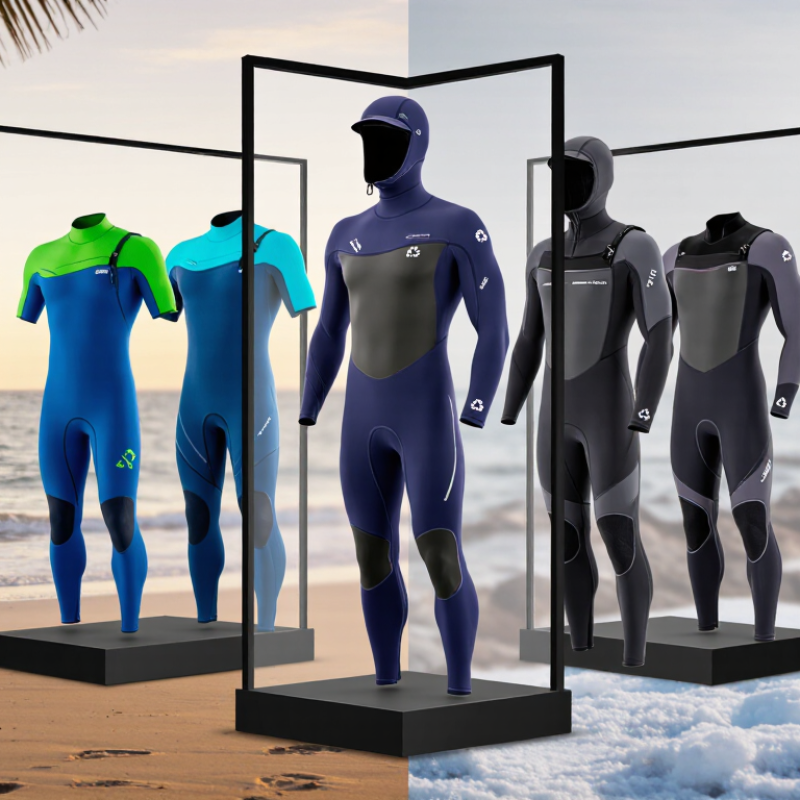
For global buyers, the best China surfing suits begin with material selection, not decoration. Neoprene remains popular because it traps a thin layer of warmth against the skin. A 3/2 mm suit suits milder water, while a 4/3 mm suit handles colder sessions. Thickness alone does not guarantee comfort. Dense neoprene can restrict paddling if the pattern is poorly cut.
Stretch matters during shoulder rotation. High-stretch blends usually feel better around the arms, chest, and waist. Nylon or polyester outer layers add abrasion resistance, especially near the knees and seat. Some suits use recycled fibers, but buyers should request test data rather than trust vague environmental claims. No material is perfect.
Construction technology often separates a reliable suit from a disappointing one. Blind-stitched and glued seams reduce water entry better than basic flatlock seams. Seam tape adds protection around high-stress areas, though it may increase weight. A smooth skin chest panel can reduce wind chill. Quick-dry linings improve comfort between sessions, but they cannot replace correct thickness.
Fit testing deserves equal attention. Ask suppliers for measurement charts, sample approval, stretch recovery tests, and seam inspection records. Check whether the zipper moves smoothly without pulling the neck. Small gaps at the wrists can create cold flushing. I have seen attractive samples fail after repeated bending, so durability testing should include washing, stretching, and saltwater exposure. Buyers should also compare size consistency across production batches. One overlooked issue remains: a technically advanced suit can still feel wrong when the armhole or torso length ignores local body shapes.